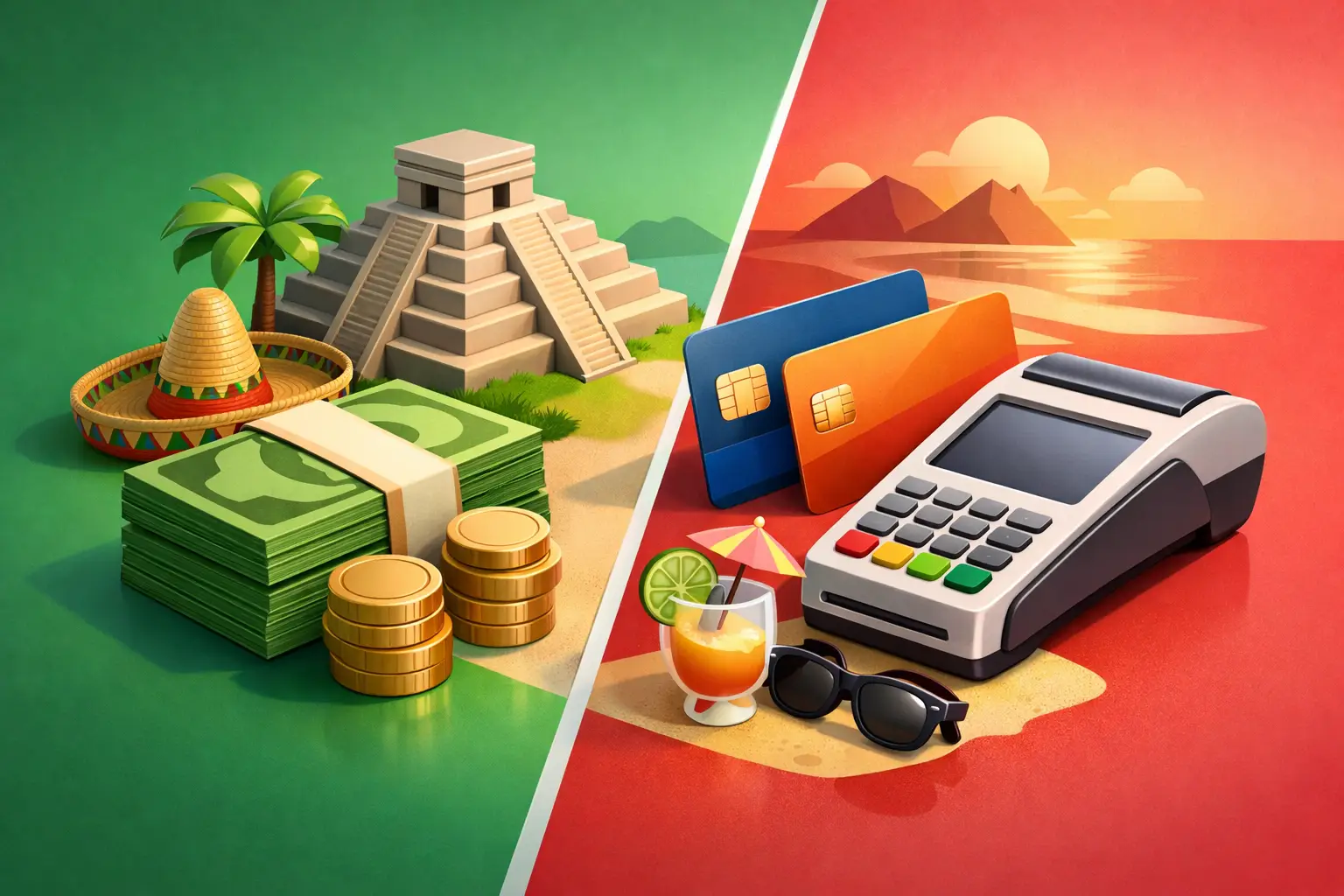
Your beachfront dinner bill may be easy to pay by card, while the best fish taco stand you find the next afternoon may be cash-only. That is the real answer to cash versus cards Mexico for a Puerto Peñasco vacation: bring both, then use each where it makes the most sense.
Rocky Point is wonderfully accessible for visitors driving from Arizona and other parts of the Southwest, but it is still Mexico. Payment habits, exchange rates, bank policies, and the availability of card terminals can vary from one business to the next. A little preparation means less time thinking about money and more time enjoying Sandy Beach sunsets, fresh seafood, and your oceanfront getaway.
Cash Versus Cards Mexico: The Smart Approach
For most visitors, the best plan is not choosing cash or cards. It is carrying a primary credit card, a backup card, and enough Mexican pesos for smaller purchases, tips, and places where card payments are unavailable or unreliable.
Credit cards are widely accepted at many resorts, vacation rental offices, larger restaurants, grocery stores, pharmacies, and established activity providers in Puerto Peñasco. Cash remains essential for taxis, beach vendors, tips, smaller eateries, parking attendants, local markets, and the spontaneous purchases that often become favorite vacation memories.
Think of your card as the tool for major expenses and your pesos as your everyday flexibility. This approach also gives you a backup if a card reader loses service, your bank flags a transaction, or a merchant has a temporary card minimum.
Why Mexican Pesos Are Usually Your Best Cash Option
U.S. dollars are commonly accepted in Rocky Point, especially in tourist areas. Many local businesses quote prices in dollars or are happy to take them. Still, pesos are generally the better cash currency for daily spending.
When you pay in dollars, the business chooses the exchange rate. It may be fair, but it may not match the rate you would receive through an ATM or your bank. You may also receive change in pesos, which can make a simple purchase harder to track. Paying in pesos lets you see the local price clearly and avoids guessing what rate is being used.
That does not mean you need to arrive with a thick envelope of cash. For a short beach trip, a reasonable amount of pesos for tips, transportation, snacks, and small shopping is often enough. Keep a few small bills available. Asking a busy server or vendor to break a large bill can be inconvenient, especially early in the day.
Dollars Still Have a Place
Bring a small amount of U.S. cash as a backup, particularly if you are driving in from the United States. Dollars can be useful in an emergency, at businesses that list dollar prices, or if you need to cover an unexpected expense before visiting an ATM.
Use clean, newer bills without tears, excessive marks, or heavy wear. Some businesses are understandably cautious about accepting damaged or older U.S. notes. Small denominations are more useful than $100 bills for tips and casual purchases.
When to Use a Credit Card in Puerto Peñasco
A credit card is often the safest and most convenient payment method for your largest vacation expenses. Use one when paying for your resort stay, vacation rental balance, a special dinner, a larger grocery run, or booked activities. You will have a transaction record, and you will not need to carry large amounts of cash around town or on the beach.
Before leaving home, check whether your card charges foreign transaction fees. A card with no foreign transaction fee can make a meaningful difference over several meals, excursions, and shopping stops. Also notify your card issuer of your Mexico travel dates if your bank recommends it, and make sure the phone number connected to your account is current.
Visa and Mastercard tend to be the most broadly accepted options. American Express acceptance can be more limited, particularly at smaller businesses. Carrying two different cards is wise. Keep one in your wallet and one secured at your lodging in case a card is misplaced, blocked, or declined.
Always Choose Pesos at the Card Terminal
Some card terminals offer to charge your card in U.S. dollars. This option may sound convenient, but it is usually better to choose Mexican pesos.
When you select dollars, the merchant’s payment processor converts the charge using its own exchange rate, a practice called dynamic currency conversion. That rate is often less favorable than the rate your card network applies. If the terminal asks whether you want to pay in USD or MXN, choose MXN.
Check the total on the terminal before approving it. This simple step helps prevent confusion when prices are quoted in one currency and processed in another.
ATMs: Convenient, With a Few Rules
ATMs are one of the easiest ways to get pesos after you arrive. Use machines located at banks, well-known grocery stores, or established businesses rather than isolated street ATMs. Visit during daylight hours when possible, and be aware of your surroundings as you would in any destination.
Your own bank may charge an international withdrawal fee, and the ATM operator may charge another fee. To reduce the impact, take out a sensible amount once rather than making several very small withdrawals. Avoid withdrawing more than you are comfortable carrying or storing securely in your rental.
If the ATM offers to convert your withdrawal into U.S. dollars, decline that conversion and continue in pesos. Your bank generally provides a better exchange rate than the ATM’s conversion offer.
It is also smart to bring a debit card only if you plan to use it. Credit cards offer stronger purchase protections for many travelers, while debit cards provide direct access to your bank account. Keep debit withdrawals focused on cash needs, and use a credit card for major purchases when possible.
Budget for Tips, Transportation, and Beach Days
Cash matters most in the moments where a card is least practical. Build a small cash cushion into your trip budget for dining tips, housekeeping, bell staff, taxi rides, parking, beach chairs, vendors, and quick meals.
Tipping customs can vary by service and setting, but gratuities are appreciated. At restaurants, many visitors tip similarly to how they would in the United States, while considering the level of service and whether a service charge already appears on the bill. Check your receipt before adding a tip, especially with larger groups.
For taxis, agree on the fare before the ride begins and confirm whether the driver accepts pesos, dollars, or both. For guided tours and watersports, ask about payment methods when you reserve. A provider may accept a card deposit but request the remaining balance in cash.
A beach day is another reason to keep small bills with you. The convenience of buying a cold drink, fresh fruit, or a handmade souvenir without searching for an ATM is part of the fun.
Keep Your Money Secure Without Overthinking It
Puerto Peñasco is built for vacationers, and straightforward precautions go a long way. Do not carry every dollar, card, and document you brought on every outing. Take what you expect to need, leave the rest secured at your resort or vacation rental, and avoid displaying a large stack of cash when paying.
Split your cash between a wallet and a separate secure location. Keep a photo or written record of your card issuer’s emergency contact number somewhere other than your phone. If you are traveling with family or friends, consider having more than one person carry a payment method so the group is not dependent on a single wallet.
For drivers, keep tolls, fuel, snacks, and other road-trip expenses in mind. Your payment mix should work from the border to your lodging, not just once you arrive at the beach.
A Simple Payment Plan for Your Rocky Point Trip
Arrive with a no-foreign-transaction-fee credit card for lodging and major purchases, a second card stored separately, a modest reserve of U.S. dollars, and access to a debit card for pesos from a trusted ATM. Once you have pesos, use them for smaller local purchases and tips. Use your card in pesos whenever the terminal gives you a currency choice.
The exact amount of cash depends on your group size, how often you plan to dine out, and whether you prefer tours, taxis, or a rental car. A family staying at a resort will have different needs than a couple spending most of the day exploring local restaurants and beaches. Plan for convenience, not perfection.
With both pesos and cards ready, you can say yes to the experiences that make Puerto Peñasco special – an unplanned seafood lunch, a sunset cruise, or one more round of drinks by the water – without letting payment details interrupt the vacation.